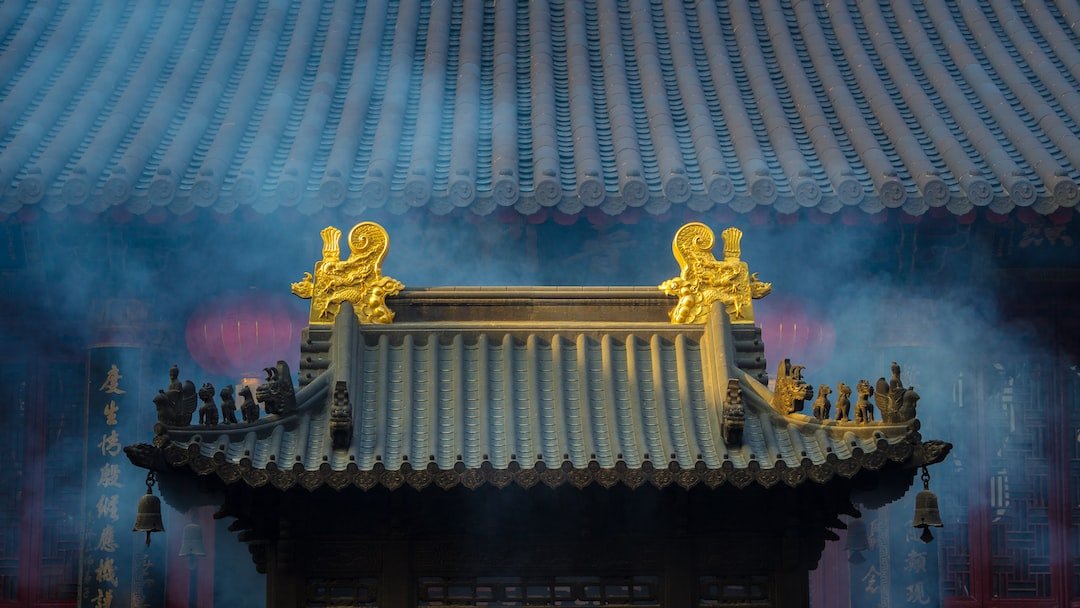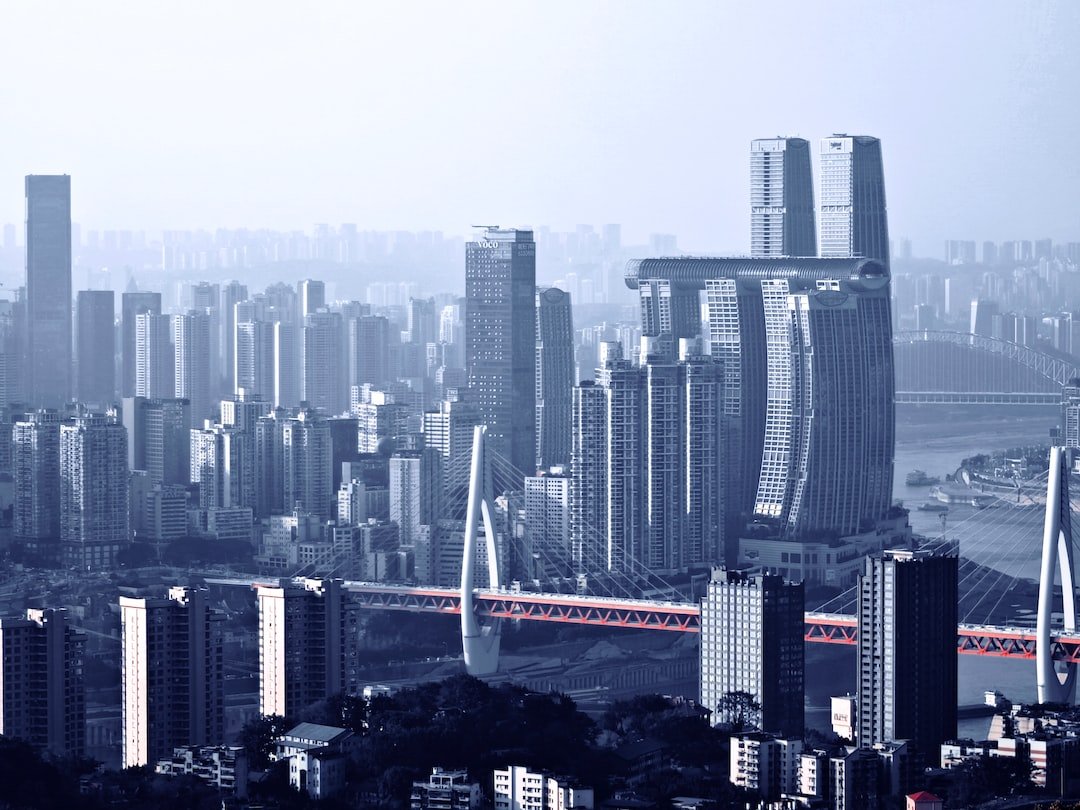
Explore China with immersive city walks, scenic guides, and cultural travel videos from across the country.
An extensive 4K video showcasing the most incredible destinations in China — from ancient landmarks to natural beauty. :contentReference[oaicite:1]{index=1}
Experience Shanghai’s most iconic streets and energetic nightlife in this walking tour through Nanjing Road and the Bund. :contentReference[oaicite:2]{index=2}
Discover lesser‑known village scenes and China’s countryside hidden gems in this cinematic travel video. :contentReference[oaicite:3]{index=3}
Walk through Shenzhen’s modern cityscape and innovation hub in this immersive tour. :contentReference[oaicite:4]{index=4}
More mainland China walking tours and travel experiences curated in this extended playlist. :contentReference[oaicite:5]{index=5}
China’s skyline cities like Shanghai and Shenzhen merge modern dynamism with historic urban culture — perfect for urban explorations. :contentReference[oaicite:6]{index=6}
Beyond megacities, China offers breathtaking landscapes, hidden villages, and rural life that reveal traditional culture and scenic wonders. :contentReference[oaicite:7]{index=7}
China is a country where ancient heritage and vibrant modern life coexist — from towering skyscrapers to breathtaking natural landscapes and rich cultural traditions. :contentReference[oaicite:8]{index=8}
The 20th Central Committee of the Communist Party of China concluded its fifth plenary session on Thursday in Beijing with a communique issued.The following is the full text of the communique:Communique of the Fifth Plenary Session ofthe 20th Central Committee of the Communist Party of ChinaAdopted at the fifth plenary session of the 20th Central Committeeof the Communist Party of China on October 29, 2026The 20th Central Committee of the Communist Party of China convened its fifth plenary session in Beijing from October 26 to 29, 2026.A total of 162 members and 117 alternate members of the Central Committee attended the session. Members of the Central Commission for Discipline Inspection and leading officials from relevant departments were present at the meeting in a non-voting capacity. Some of our primary-level colleagues and a number of experts and scholars, serving as delegates to the 20th National Party Congress, also attended the meeting in a non-voting capacity.The Political Bureau of the Central Committee presided over the meeting. Xi Jinping, General Secretary of the Central Committee, delivered an important address.The Central Committee heard and discussed a report on the work of the Political Bureau, presented by Xi Jinping on behalf of the Political Bureau. They also deliberated and adopted the Resolution of the Central Committee of the Communist Party of China on Certain Major Issues concerning Persevering with Full and Rigorous Party Self-Governance. Xi Jinping delivered explanatory remarks on the draft Resolution.At the session, the Central Committee fully affirmed the work of the Political Bureau since the fourth plenary session of the 20th Central Committee. It was unanimously agreed that the Political Bureau has secured progress in the following respects: earnestly implementing the guiding principles from the Party's 20th National Congress and the plenary sessions of the 20th Central Committee; adhering to the general principle of pursuing progress while ensuring stability; fully and faithfully applying the new development philosophy on all fronts; implementing the Five-Sphere Integrated Plan and the Four-Pronged Comprehensive Strategy in a coordinated way; balancing domestic and international imperatives; ensuring both development and security; delivering tangible results in high-quality economic development; advancing socialist democracy and the rule of law; improving public communication and cultural work; ensuring the people's wellbeing and promoting ecological conservation; safeguarding national security and social stability; further strengthening full and rigorous Party self-governance; modernizing national defense and the armed forces; carrying out work related to Hong Kong, Macao, and Taiwan; and pursuing major-country diplomacy with Chinese characteristics. Thanks to these efforts, the 14th Five-Year Plan has been brought to a successful conclusion, and the 15th Five-Year Plan period is off to a good start with new progress and results achieved in the cause of the Party and the country. It was also noted that, this year, we launched a study campaign on establishing and practicing the correct view of performance and celebrated the 105th anniversary of the Communist Party of China. These occasions have further harnessed the mighty force that stems from the entire Party and the whole nation forging ahead in unity.Looking back on the Party's journey since its founding, the Central Committee pointed out at the session that the key to the success of the Communist Party of China in winning one victory after another lies in its pursuit of the high ideal of communism, its dedication to achieving lasting greatness for the Chinese nation, and its commitment to seeking happiness for the Chinese people and rejuvenation for the Chinese nation. During each historical period, the Party has attached great importance to its self-governance, had the courage to uphold truth and correct errors, and grown ever stronger by relying on its own efforts and the support of the people to resolve its own problems, ultimately emerging as the strong leadership core in the cause of the Party and the people. The Party advanced Party building as a great project and then a great new project in the periods of revolution, development, and reform, and it has made further progress in this regard in the new era since its 18th National Congress. During this course, the Party has found two answers to the question of how to escape the historical cycle of rise and fall: the people's oversight over government and the Party's self-reform. These are the unique discoveries of the Communist Party of China, and will forever stand out in the history of Marxist parties.Participants at the session gave a highly positive assessment of the great achievements our Party has made in exercising full and rigorous self-governance in the new era. It was unanimously agreed that the Central Committee, with Comrade Xi Jinping at its core, demonstrated tremendous political courage and a strong sense of responsibility in confronting the grave situation marked by weak, hollow, and watered-down Party leadership, lax, superficial, and ineffective self-supervision and self-governance, as well as some startling problems within the Party. Staying firmly committed to full and rigorous Party self-governance, the Central Committee introduced the most stringent measures and dedicated continuous efforts to tackle all these prominent issues. As a result, the problem of lax and weak self-supervision and self-governance has been addressed at the root; unhealthy tendencies that had long gone unchecked have been curbed, deep-seated problems that had plagued the Party for years have been remedied, and serious dangers hidden within the Party, the state, and the military have been removed. The Party has thus grown stronger through revolutionary tempering. The endeavors to advance full and rigorous governance over the Party in the new era have broken new ground in the self-reform of our century-old Party and brought about historic achievements and transformations in the cause of the Party and the country. The Party and the people have thus seized the historic initiative in building a great party and a great country.It was pointed out that as the Party endeavors to supervise, govern, develop, and strengthen itself in the new era, the Central Committee, with Comrade Xi Jinping at its core, has put forward a series of new ideas, new thinking, and new strategies in response to the major questions of our times – what kind of long-term governing Marxist party we should build and how we should build it, thereby giving birth to Xi Jinping Thought on Party Building. This thought has enriched and developed Marxist theory on party building, and it represents a major achievement in advancing the Party's theoretical innovation through the integration of the basic tenets of Marxism with China's specific realities and its fine traditional culture. It stands as a crystallization of the practical experience and collective wisdom of the Party and the people. As an important component of Xi Jinping Thought on Socialism with Chinese Characteristics for a New Era, it provides fundamental guidance and a road map for further advancing the great new project of Party building in the new era.It was stressed that many favorable conditions are now in place for advancing full and rigorous Party self-governance, while we are also facing many new circumstances and new issues in this endeavor. Profound changes in global, national, and Party conditions have made the Party's tasks of uniting and leading the people in safeguarding China's sovereignty, security, and development interests; of uniting and leading the people in promoting reform and development and maintaining social harmony and stability; and of maintaining its advanced nature and integrity even more arduous. All this poses formidable challenges to the Party's governance and leadership capacity, the quality of its membership, and its resistance against corruption and moral decline under the new circumstances. Moreover, the "four tests" and "four dangers" confronting our Party are still protracted, complicated, and serious.On this account, all of us in the Party must gain a deep understanding of the great significance of persevering with full and rigorous Party self-governance from the strategic perspective of consolidating the Party's long-term governing position and realizing the great rejuvenation of the Chinese nation. We must build firm confidence, maintain resolve, and adopt higher standards and more concrete measures to carry forward the valuable experience of full and rigorous Party self-governance in the new era, handle and resolve the prominent problems in Party building, and consolidate and develop the sound political situation formed through Party self-supervision and self-governance.It was stated that in persevering with full and rigorous Party self-governance, we must uphold Marxism-Leninism, Mao Zedong Thought, Deng Xiaoping Theory, the Theory of Three Represents, and the Scientific Outlook on Development, fully implement Xi Jinping Thought on Socialism with Chinese Characteristics for a New Era, and thoroughly study and apply Xi Jinping Thought on Party Building. Dedicated to fulfilling the Party's missions and tasks, we must act in line with the overall requirements for Party building in the new era, take the Party Constitution as our fundamental guide, maintain the Party's vanguard nature, and uphold the overall leadership of the Party and the centralized, unified leadership of the Party Central Committee. We must focus on enhancing the Party's capacity for long-term governance, preserving its advanced nature and integrity, and maintaining its close bond with the people. We must unwaveringly apply strict principles, improve the system of exercising full and rigorous Party self-governance, and take strengthening the Party politically as the overarching principle to advance Party building on all fronts. We must stimulate greater motivation, initiative, and creativity within the whole Party, continue working to purify, improve, renew, and excel ourselves, and constantly strengthen the Party's capacity for providing political leadership, giving theoretical guidance, organizing the people, and inspiring society. In doing so, we will see that the Party always remains a vibrant Marxist governing party that stays at the forefront of the times, enjoys the wholehearted support of the people, and is able to withstand all tests, and that it always remains the strong leadership core of the cause of socialism with Chinese characteristics.At the session, the guiding principles for persevering with full and rigorous Party self-governance were highlighted as follows: serving the Party's missions and tasks; taking strengthening the Party politically as the overarching principle; exercising rigorous governance across the board; adopting a problem-oriented approach; upholding fundamental principles and breaking new ground; adhering to a top-down approach; and running the Party according to regulations.Systematic plans for persevering with full and rigorous Party self-governance were also made at the session with the emphasis on strengthening the Party spirit of Communists; strictly practicing democratic centralism; cultivating high-caliber officials capable of shouldering the mission of national rejuvenation; building a well-knit organizational system characterized by cross-level alignment and effective implementation; improving conduct and tightening discipline on an ongoing basis; taking firm and coordinated action against corruption; running the Party with systems and regulations; refining Party and state oversight systems; and ensuring all responsibilities of Party self-supervision and self-governance are fulfilled in earnest.It was pointed out that strengthening the Party spirit represents a fundamental task of our efforts to ensure full and rigorous Party self-governance. We must, therefore, encourage all Party members and officials to uphold the Party's nature and purpose, raise Party consciousness, have a better understanding of their identity as Party members and the Party's vanguard nature, and maintain a lifelong commitment to cultivating stronger Party spirit. We must also encourage them to devote efforts to strengthening ideals and convictions, forging strong loyalty to the Party, fostering deep affection for the people, always seeking truth from facts, building moral character, and preserving honesty and integrity. These efforts will help them to be loyal, upright, and responsible and always preserve the true political character of Communists. In this regard, measures will be taken to strengthen education on loyalty to the Party, build cohesion and inner strength with the Party's latest theories, nurture the Party spirit with the Party's good traditions and fine traditional Chinese culture, temper the Party spirit in practice, and enhance Party spirit appraisal.It was noted that democratic centralism is the Party's fundamental organizational principle and leadership system, and its implementation is therefore an inherent requirement for exercising full and rigorous Party self-governance. We must improve and implement the institutions of democratic centralism, giving full play to intraparty democracy while effectively practicing correct centralism. This will allow us to better draw on the political, organizational, institutional, and working strengths of democratic centralism. In practice, measures will be taken to uphold and strengthen the Party Central Committee's centralized, unified leadership, improve the efficacy of intraparty democracy, strictly implement deliberation rules and decision-making procedures for leadership teams, and regulate leadership team heads' performance of duties and exercise of power.It was stated that strict management of officials is the key to full and rigorous Party self-governance. We must implement the Party's organizational line for the new era and apply stringent standards to the education, cultivation, selection, appointment, management, and oversight of officials. On this basis, we will build up the ranks of high-caliber officials with firm political commitment, outstanding professional competence, excellent work conduct, and strict discipline. Following sound guidelines in appointing officials, we should take targeted, well-designed measures to select and appoint officials, inspire officials to foster and act on the correct view of performance, enhance officials' competence in fulfilling their duties and breaking new ground, improve the training and selection of outstanding young officials, and strengthen management and oversight of officials, with a view to promoting the training, recruitment, and utilization of talented people across the board.It was stated that Party organizations at all levels play the principal role in exercising full and rigorous Party self-governance. It is therefore essential to systematically advance the development of Party organizations at all levels and in all sectors to strengthen their political and organizational functions. This will help ensure that the Party's lines, principles, and policies, as well as the Party Central Committee's decisions and plans are implemented through well-coordinated, targeted, and effective efforts. More specifically, we should give play to the exemplary role of Party organizations of central Party and state organs, bolster the functions of local Party committees, take coordinated steps to improve primary-level Party organizations across all sectors, promote Party building in emerging sectors, build a strong contingent of Party members, and refine mechanisms to ensure alignment across different levels of Party organizations.It was pointed out that improving conduct and tightening discipline are effective measures to advance full and rigorous Party self-governance. We must work in concert to enhance Party spirit, improve Party conduct, and tighten Party discipline, and integrate conduct improvement and discipline enforcement with anti-corruption measures. Drawing on the experience gained in advancing full and rigorous Party self-governance through conduct improvement efforts, we will ensure steady improvements in our conduct, supervise and govern the Party with strict discipline, and pool support and strength with a positive image. In practice, we will follow the Party's mass line in the new era, steadfastly implement the central Party leadership's eight-point decision on improving work conduct, put in consistent and sustained efforts to improve conduct, ensure more rigorous discipline enforcement, and make full use of discipline as a guide, restraint, guarantee, and incentive.It was noted that taking integrated steps to ensure that officials do not have the audacity, opportunity, or desire to commit corruption is both an important strategy for full and rigorous Party self-governance and a fundamental guideline for our fight against corruption. The Party tolerates no corruption, as it has no special interests of its own besides the interests of the working class and the greatest possible majority of the people. Keeping this firmly in mind, we must steadfastly follow a distinctive Chinese path of anti-corruption and strengthen the Party Central Committee's centralized, unified leadership over anti-corruption work. We must take systematic steps to address both symptoms and root causes of corruption and adopt a holistic approach that combines severe punishment, targeted remedy, and effective prevention, carrying this fight through to the end. While maintaining a tough stance against corruption, we should also strengthen checks on and oversight over the exercise of power, fortify the cultural-ethical foundations for championing integrity and disdaining corruption, and enhance coordinated efforts to prevent corruption by rooting out audacity, opportunity, and desire.It was noted that strengthening Party regulations and institutions represents a long-term, fundamental strategy for ensuring full and rigorous Party self-governance. We must uphold the Party Constitution as the fundamental code of conduct for all Party members, deepen institutional reforms related to Party building, and integrate law-based governance of the country and regulation-based self-governance of the Party, thus providing strong institutional support for persevering with full and rigorous Party self-governance. For this purpose, stronger measures will be taken to improve the framework of Party regulations and institutions, ensure the enforcement of institutions, and eliminate hidden rules.It was stated that persevering with full and rigorous Party self-governance entails further improvement to Party and state oversight systems. With this in mind, we should ensure that Party committees (leading Party members groups) exercise general oversight, improve the dual leadership system for discipline inspection and supervision, pursue greater integration and efficient collaboration between intraparty oversight and other avenues of oversight, and give play to the role of inspections as a powerful tool of comprehensive oversight.It was stressed that persevering with full and rigorous Party self-governance is the common political responsibility of all Party members. Attaching crucial importance to the responsibility system for Party self-supervision and self-governance, we will establish a robust, unified system where all sides perform their respective responsibilities in close collaboration. Furthermore, relevant performance assessment mechanisms will be improved, so that those who have failed to effectively carry out Party self-supervision and self-governance and caused serious problems in this regard are strictly held to account.It was pointed out that studying and implementing the guiding principles from this plenary session represent a major political task for the entire Party both at present and in the period to come. With this in mind, we should fully grasp the guiding principles from the session, strengthen organization and leadership, and make tenacious efforts to solve prominent problems, seeing that all arrangements of the Resolution are implemented to the letter.It was stressed that all aspects of our work agenda should be steadily advanced at the turn of the year. To fulfill this year's main goals and tasks for economic and social development and secure a good start for the 15th Five-Year Plan period, we will adhere to the general principle of pursuing progress while ensuring stability; fully and faithfully apply the new development philosophy on all fronts; move faster to foster a new pattern of development; make full and proper use of macro policies; tap deeper into the potential of domestic demand; further deepen reform and opening up; and pursue sustained and high-quality economic growth driven by innovation. In an effort to ensure security while pursuing development, we will press ahead with initiatives to see that public services are inclusive, meet essential needs, and provide a cushion for the people most in need, and deliver better results in our work related to workplace safety, disaster prevention, mitigation, and relief, food and drug safety, as well as social stability. As part of our endeavors to consolidate and expand the progress made in the study campaign on establishing and practicing the correct view of performance, we will, in the midst of a new round of elections at all levels, step up training for new members of leadership teams, particularly their heads, on the view of performance to inspire and guide them to deliver for the people through hard work in line with the requirements of serving the public good, benefiting the people, making sound decisions, and taking solid, down-to-earth actions.The Central Committee decided at the session that the Party will convene its 21st National Congress in Beijing in the second half of 2027 and stated that this congress, which is to be held at a critical stage for basically realizing socialist modernization and on the new journey toward the Second Centenary Goal, will be a highly important meeting and an event of great political significance for both the Party and the country. The entire Party must unite and lead the Chinese people in forging ahead with one heart and one mind to achieve the goal of basically realizing socialist modernization and continue to break new ground in building a great country and advancing national rejuvenation on all fronts through Chinese modernization. With concrete actions, we will set the stage for the successful convening of this congress.At the session, Zhang Shengmin was elected member of the Political Bureau of the Central Committee.It was decided that, in accordance with the Party Constitution, empty seats on the Central Committee were filled by alternate members Lu Dongliang, Bao Gang, Xing Shanping, Qu Yingpu, Lv Jun, Zhu Tianshu, Zhu Guoxian, Liu Jun, Liu Jie and Liu Qiang.At the session, the Central Commission for Discipline Inspection's reports on the grave violations of discipline and the law involving Ma Xingrui, Lan Tianli, Liu Jianchao, Wang Lixia, Jin Zhuanglong, Lei Fanpei, Yi Huiman, Wang Xiangxi, Sun Shaocheng, Li Yunze, Fei Dongbin, Wu Shenghua, Yu Jianfeng, Yuan Jie, Zhang Zhongyang, Wen Gang, Jin Donghan and Fang Hongwei were deliberated and adopted. The Central Military Commission's reports on the grave violations of discipline and the law involving Zhang Youxia, Liu Zhenli, Wang Renhua, Liu Qingsong, Huang Ming, Li Qiaoming, Li Wei, Zhang Hongbing, Wang Haijiang, Zhang Lin, Wang Peng, Liu Faqing, Yang Cheng, Zhong Shaojun, Zhao Xiaozhe and Fang Yongxiang were also deliberated and adopted. The Political Bureau's previous decisions to expel Ma Xingrui, Zhang Youxia, Liu Zhenli, Lan Tianli, Liu Jianchao, Wang Lixia, Jin Zhuanglong, Lei Fanpei, Yi Huiman, Wang Xiangxi, Sun Shaocheng, Wang Renhua, Liu Qingsong, Huang Ming, Li Qiaoming, Li Wei, Zhang Hongbing, Wang Haijiang, Zhang Lin, Wang Peng, Liu Faqing, Yang Cheng, Zhong Shaojun, Zhao Xiaozhe, Fei Dongbin, Wu Shenghua, Yu Jianfeng, Yuan Jie, Zhang Zhongyang, Wen Gang, Jin Donghan, Fang Hongwei and Fang Yongxiang from the Party and to remove Li Yunze from his position within the Party were confirmed.At the session, all Party members were called upon to rally more closely around the Party Central Committee with Comrade Xi Jinping at its core and fully implement Xi Jinping Thought on Socialism with Chinese Characteristics for a New Era; forge ahead with dedication and enterprise, persevere with full and rigorous Party self-governance, and continually break new ground in supervising, governing, developing, and strengthening the Party; and unite and lead the Chinese people of all ethnic groups in a tireless effort to build China into a great modern socialist country in all respects and advance national rejuvenation on all fronts through Chinese modernization.
"Borrow a boat to sail in the sea -- we will find more ways to use the opportunities brought by the Belt and Road Initiative," he said.
Chinese President Xi Jinping and his U.S. counterpart Donald Trump on Monday discussed bilateral ties and the situation on the Korean Peninsula on phone, pledging close contact by various means to promptly exchange views on major issues of common concern.
General Motors’ cancellation of a major supply deal has dealt a blow to U.S. rare-earth ambitions.
Qinghai province in northwestern China sent 30.866 billion kilowatt-hours of electricity to other regions in the first nine months of 2026, up 9.7% from a year earlier, with clean energy accounting for 98.1% of the total, State Grid Qinghai Electric Power Co. said Wednesday.
The criminal ring used shell companies to generate fake invoices for customers seeking to evade taxes over three years, profiting by charging additional invoice service fees.
At a former Chinese labor camp in Belgium, archaeologists are piecing together the lives of workers whose contributions to the Allied war effort have long been overshadowed.
新时代的中国,日新月异。
近日,全国多地加大复商复市力度,有序恢复正常生产生活秩序。
生态环境是关系党的使命宗旨的重大政治问题,也是关系民生的重大社会问题。 习近平总书记多次指出,必须站在中华民族永续发展根本大计的高度,尊重自然、顺应自然、保护自然,建设人与自然和谐共生的现代化,建设望得见山、看得见水、记得住乡愁的美丽中国。 今天(6月5日)是世界环境日。如何像保护眼睛一样保护自然和生态环境?一起学习↓↓↓ 总监制丨闫帅南 监制丨李浙 主编丨王兴栋 编辑&制图丨马玮璐
大美中国,江山如画。 党的十八大以来,习近平总书记的考察足迹遍及神州大地。祁连山麓、坝上林海,秦岭深处、黄河之滨,总书记在大江奔涌处谋划千秋大计,在山川锦绣间擘画生态蓝图。一系列重要论述,为新时代生态文明建设提供了根本遵循和行动指南。 世界环境日到来之际,我们跟随习近平总书记的脚步,一起呵护山水、寄情山水,领悟守护绿水青山、建设生态文明之道。 江河为脉 心系长江之变,习近平总书记前往沿江重镇,考察长江经济带发展。从三峡库区到洞庭湖畔,从港口码头到企业车间,总书记深入调研,作出一系列重要指示,为新时代江河保护治理提供了重要遵循。 2018年4月,习近平总书记来到湖南岳阳城陵矶水文站考察。在狭窄的站房外长廊上,习近平总书记举目远眺。“共抓大保护,不搞大开发”的战略定力,在这里化作守护一江碧水的坚定行动。 2023年10月10日下午,习近平总书记在江西九江市考察,冒雨在江边察看,了解当地长江国家文化公园建设、长江岸线生态修复等情况。10月12日,总书记在进一步推动长江经济带高质量发展座谈会上回顾长江经济带发展历程,感慨:“做就要做好,坚定做下去。笃行不怠,一以贯之,久久为功。” 黄河安澜是中华儿女的千年期盼。党的十八大以来,习近平总书记走遍黄河上中下游,望奔流激荡,思保护发展。在总书记的指挥下,一曲生态优先、绿色发展的“黄河大合唱”正在神州大地奏响。 2019年8月,习近平总书记考察甘肃时,亲临兰州考察黄河兰州段治理保护工作,对保护黄河、治理黄河作出重要指示,强调:“保护母亲河是事关中华民族伟大复兴和永续发展的千秋大计。” 2019年9月,习近平总书记在河南郑州黄河国家地质公园岸边驻足凝望。在随后举行的黄河流域生态保护和高质量发展座谈会上,习近平总书记再次强调“让黄河成为造福人民的幸福河”。 2024年9月,习近平总书记时隔五年后再次来到甘肃兰州,在中山桥段,驻足眺望。总书记由衷感慨:黄河很美,将来会更美。 从四次以长江经济带发展为主题的座谈会到三次围绕黄河流域生态保护和高质量发展为主题的座谈会,总书记“海晏河清”的期许,始终未变。 山川为脊 2019年8月,在甘肃山丹马场,习近平总书记步入草场,强调“保护好祁连山的生态环境,对保护国家生态安全、对推动甘肃和河西走廊可持续发展都具有十分重要的战略意义。” 2020年4月,习近平总书记在位于商洛市柞水县的秦岭牛背梁国家级自然保护区,考察秦岭生态保护情况。他语重心长地说,“保护好秦岭生态环境,对确保中华民族长盛不衰、实现‘两个一百年’奋斗目标、实现可持续发展具有十分重大而深远的意义。” 2021年3月,习近平总书记来到福建考察。在武夷山,总书记谆谆告诫:“武夷山有着无与伦比的生态人文资源,是中华民族的骄傲,最重要的还是保护好。” 2021年8月,在塞罕坝林场,习近平总书记登上月亮山,俯瞰荒原变林海的人间奇迹。习近平总书记指出,“我们建这片林,它的生态屏障作用,要永远发挥下去。” 从“绿水青山就是金山银山”到“山水林田湖草沙一体化保护和系统治理”,习近平生态文明思想如同春风化雨,推动着矿坑蝶变、沙地披绿。放眼中华大地,生态屏障持续筑牢,人与自然和谐发展。 人民为本 2020年8月,习近平总书记来到马鞍山市,察看长江水情水势,了解岸线整治和渔民退捕工作落实情况。总书记特别强调,“长江禁渔也不是把渔民甩上岸就不管了,要把相关工作做细做实,多开发就业渠道和公益性岗位,让渔民们稳得住、能致富。” 2021年4月,在广西漓江的碧波上,习近平总书记回忆自己的深深的“漓江情结”,指出“广西旅游产业大有可为。” 2021年9月,在陕西高西沟村的一处山头上,习近平总书记举目凝望,指出“把生态治理和发展特色产业有机结合起来”。生态治理的宏大战略,最终要落脚于人民群众的获得感。 长江十年禁渔让“江豚逐浪”再现,黄河滩区迁建让百万群众安居,塞罕坝林场造就“绿色银行”,这些生动实践印证着:良好生态环境是最普惠的民生福祉。 从长江黄河的奔涌浪涛,到祁连武夷的峻秀风骨,习近平总书记的足迹丈量着中华大地的脉络,也勾勒出生态文明建设的壮阔图景。 策划:赖向东 刘菁 统筹:毕晓洋杨玉华 主笔、制作:卢烨 陈诺 编辑:虞东升 张曼怡 刘军喜
中新社北京10月30日电 (记者 谢雁冰 黄钰钦)中共中央10月30日在北京举行新闻发布会,介绍和解读党的二十届五中全会精神。中央组织部分管日常工作的副部长黄建发表示,全面从严治党和鼓励担当作为是内在统一的,“严并不是要把大家管死”。
新华社快讯:10月30日,国家主席习近平同瑞士联邦主席帕姆兰在北京共同出席合作文件签字仪式。